
Strong dental crowns in Clearwater and Seminole, FL for the lasting health and beauty of your smile
Your tooth is only as strong as its “armor.” When this outer enamel covering is damaged, we at Boulevard Dental in Clearwater and Seminole, FL can rebuild your tooth’s natural defenses. Drs Wujick, Moss, Kopakin and Castillo do so with durable dental crowns that look, feel, and function like natural tooth structure.
Protection, as nature intended
A natural, healthy tooth has three layers. Working from the outside inward, those layers are: the protective enamel, the softer and more yellow dentin, and the pulp tissue at the center of the tooth. The pulp contains nerves and blood vessels. Once the tooth has matured, it no longer depends on the pulp for its survival. For this reason, root canal therapy can be a healthy option to “save” a badly damaged tooth. During the process, the damaged pulp tissue is removed. Root canal therapy is generally followed with a dental crown, which restores the visible part of the tooth above the gumline.
While enamel is stronger than skeletal bone, it is not impervious. Enamel may be eroded due to any number of threats, including the process of tooth decay. The bacteria in plaque make destructive acids when they come in contact with starches and sugars in foods and drinks. For this reason, we must prevent the build-up of plaque with good oral hygiene at home and professional visits to the dentist’s office.
Wear and tear from behaviors such as clenching and grinding your teeth can also erode enamel. As enamel is degraded, the dentin layer is exposed. You may experience sensitivity. Without treatment, the process continues. As the deeper layers of the tooth are affected, more extensive restorative treatments are necessary to restore oral health and healthy function. Sometimes, the tooth is not repairable, even with nonsurgical root canal therapy or other endodontic procedures. In those cases, teeth must be extracted and replaced with conventional or implant-supported bridges or dentures.
Crowns to the rescue
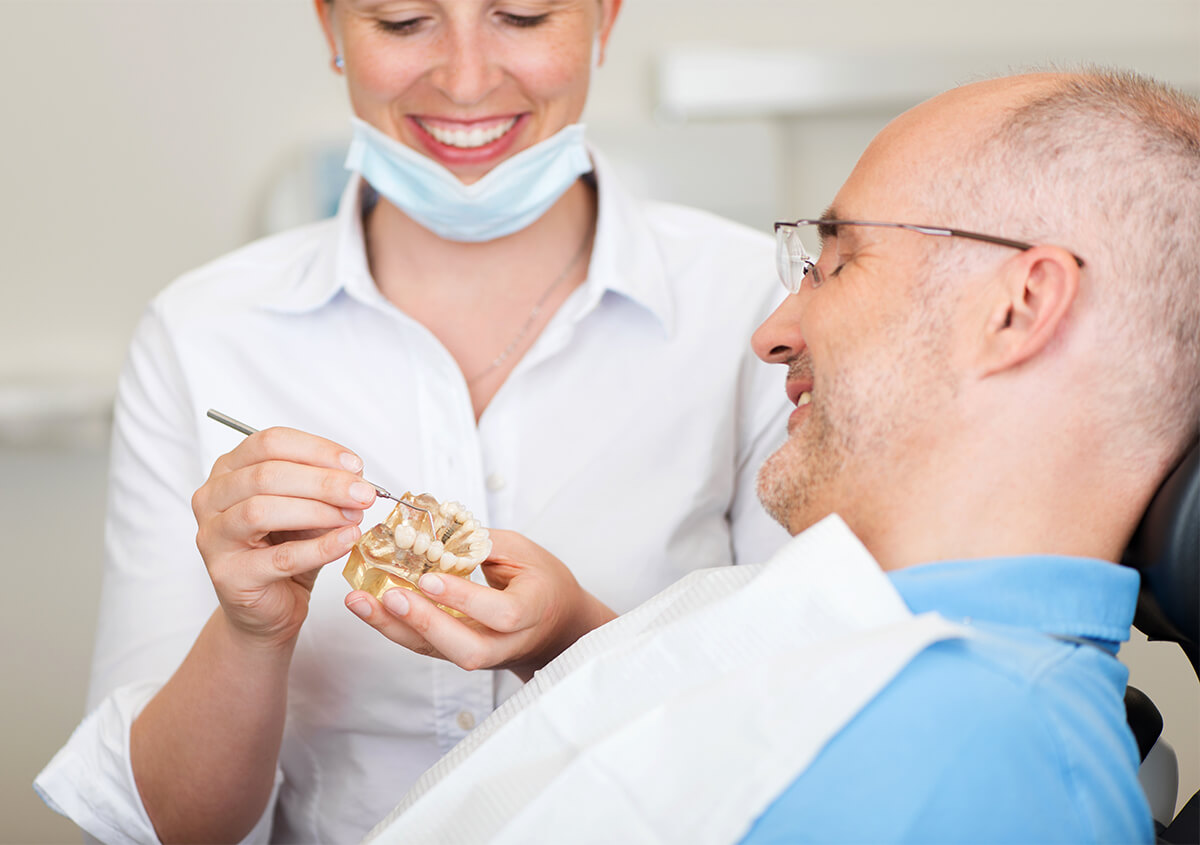
When the visible part of the tooth that is weakened due to decay, fractures, or other trauma, a dental crown may be made to replace the damaged tooth structure. The vulnerable tissue is removed. The natural tooth structure is shaped. And your new crown is built to your exact specifications. It is designed to fit over the natural tooth, reinforcing it and protecting it from external forces that can threaten the structural integrity of the tooth. Crowns may be made from dental ceramics, such as porcelain; metal alloys; or a combination of ceramics and metals. Patients with damaged front teeth may gravitate toward porcelain crowns due to how the material mimics the aesthetic properties of natural enamel. So, the location and function of the tooth to be crowned is a consideration when selecting from an array of strong and cosmetic materials.
Do not wait for issues to arise to contact us! Schedule your appointment at one of our two area offices today Clearwater (727) 758-2898 or Seminole (727) 308-6224.